
Kindred Spirits: Artists in the Tenth Street Studio Building, Celebrating Frederic Church at 200 Through Art, Community, and Connection

Kindred Spirits: Artists in the Tenth Street Studio Building, Celebrating Frederic Church at 200 Through Art, Community, and Connection
Hagerstown MD — Opening March 7, 2026, the Washington County Museum of Fine Arts invites visitors to step into the creative heart of nineteenth-century American art with Kindred Spirits: Artists in the Tenth Street Studio Building.
Presented as part of the international Frederic Church 200 celebration, the exhibition marks the 200th anniversary of the birth of Frederic Edwin Church, one of America’s most influential landscape painters, while offering a fresh perspective on the artistic community that shaped his legacy.
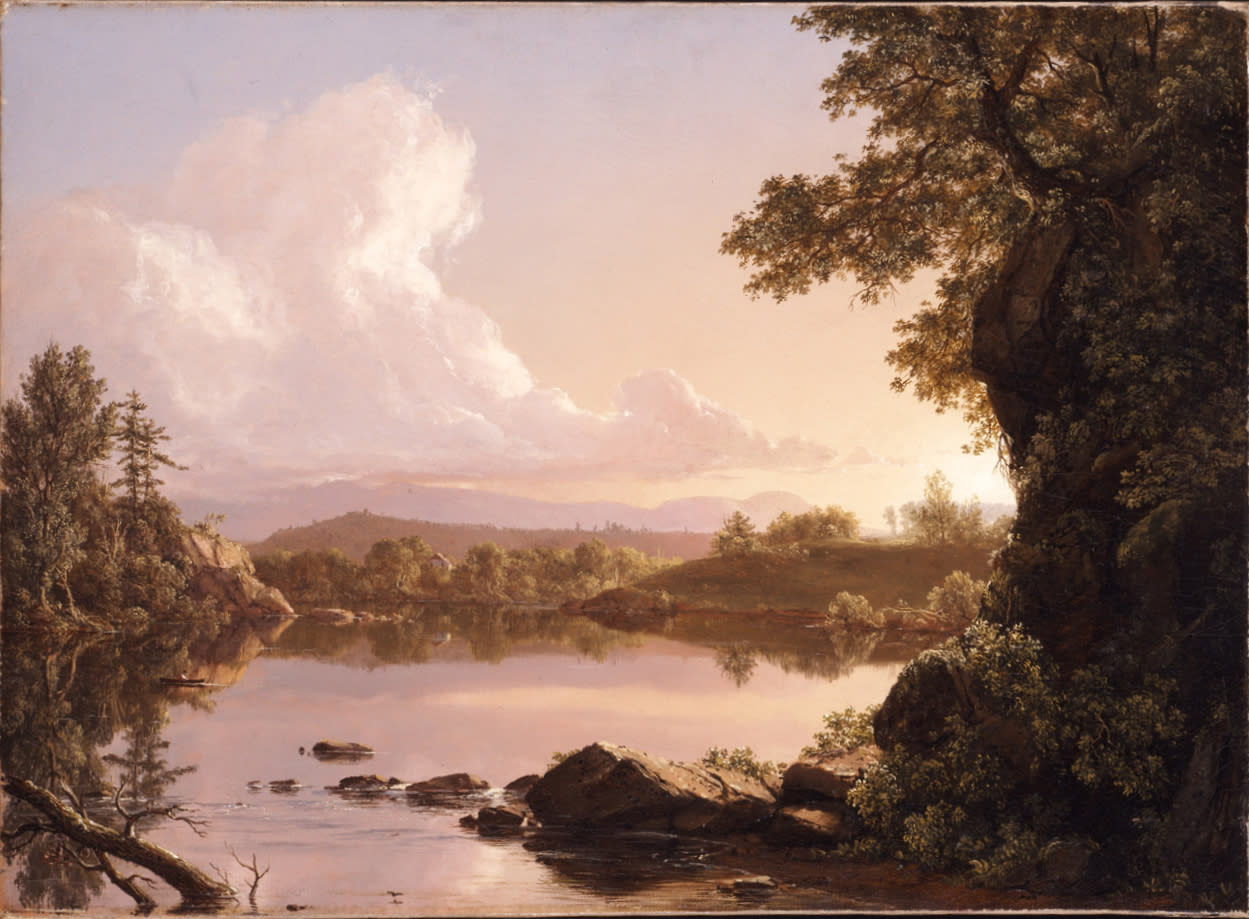
A year-long celebration organized by Olana, the New York State Historic Site, that encompasses Church’s home and studio in the Hudson Valley, our special installation joins dozens of events planned by museums worldwide exploring the artist’s enduring impact. While many projects and exhibitions focus on Church’s monumental paintings, Kindred Spirits tells a broader story — one centered on collaboration, mentorship, and the vibrant network of artists who lived and worked alongside him. Built around key works in the museum’s collection, the installation uses our significant early Church painting, Scene on the Catskill Creek as the nucleus for a group of works that illustrate the importance of the Tenth Street Studio Building and the connections between artists. (The installation’s title is borrowed from a famous 1849 painting by Asher Brown Durand in the collection of the Crystal Bridges Art Museum, Benton, Arkansas.)
Rather than presenting Church as a solitary genius, Kindred Spirits reveals him as a catalyst for connection. Artists shared studios, split rent, advised one another professionally, and traveled together across continents in search of inspiration. Church shared a second-floor studio with Martin Johnson Heade (represented in our collection by his painting Gertrude of Wyoming) for more than a decade, while friendships formed within the building led to artistic expeditions to South America, Europe, and the Middle East. These shared experiences shaped not only individual careers but the visual identity of American landscape painting itself.
At the center of this story is the Tenth Street Studio Building, completed in 1857 in New York City at a time when artists struggled to find suitable working spaces. Painters often labored in
cramped attic rooms with poor light and little professional visibility. Recognizing both the artistic and commercial needs of a growing creative class, developer James Boorman Johnston and architect Richard Morris Hunt designed a revolutionary solution: the nation’s first purpose-built studio building dedicated entirely to artists.
The multistory structure was more than practical workspace — it was a bold experiment in elevating the status of American art. Designed according to principles taught at the École des Beaux-Arts in Paris, the building’s red brick façade and refined architectural details signaled professionalism and ambition. Inside were more than twenty studios of varying sizes, along with a grand exhibition gallery where artists could present their work to collectors, critics, and the public. Contemporary observers celebrated the building as evidence of a growing cultural respect for art in America.
New York had become the center of the nation’s art world, and the Tenth Street Studio Building quickly emerged as its creative nucleus. Wealthy patrons attended receptions, critics visited studios, and curious audiences experienced art in immersive settings unlike anything previously available in the United States. Artists not only painted there — they built careers, forged friendships, and shaped the future of American culture.
Church was among the building’s most influential tenants. His success attracted an extraordinary community that included, in addition to Heade, Albert Bierstadt, Sanford Robinson Gifford, and later Winslow Homer. Together, these artists transformed the building into what might be called the headquarters of the Hudson River School.
Visitors will also discover how artists at Tenth Street pioneered new ways of presenting art. Studios doubled as theatrical exhibition spaces, where dramatic lighting, elaborate frames, and carefully staged interiors transformed viewing paintings into cultural events. These “Great Picture Exhibitions” drew crowds that lined city streets, turning artists into public figures and redefining how audiences engaged with art.
The collaboration with Olana deepens this story. While Olana represents the culmination of Church’s artistic vision — a 250-acre designed landscape uniting art, architecture, and environment — Kindred Spirits explores the earlier collaborative world that made such ambition possible. The installation explores how Church’s greatest achievement may not have been a single painting, but the artistic community he inspired.
As part of the global Frederic Church 200 initiative, the Washington County Museum of Fine Arts connects local audiences to an international celebration of creativity, exploration, and environmental awareness. More importantly, it invites visitors to experience art as Church himself understood it: not as an isolated endeavor, but as a shared pursuit shaped by dialogue, friendship, and collective imagination.
This spring, discover some of the kindred spirits who helped shape American art.
Images


Additional Info
Media Contact : Bailey Rafter, Manager of Marketing and Publications; 301-739-5727; brafter@wcmfa.org